The Ultimate Guide to the Marine Physical Fitness Test: Scoring, Standards, and Prep Strategy
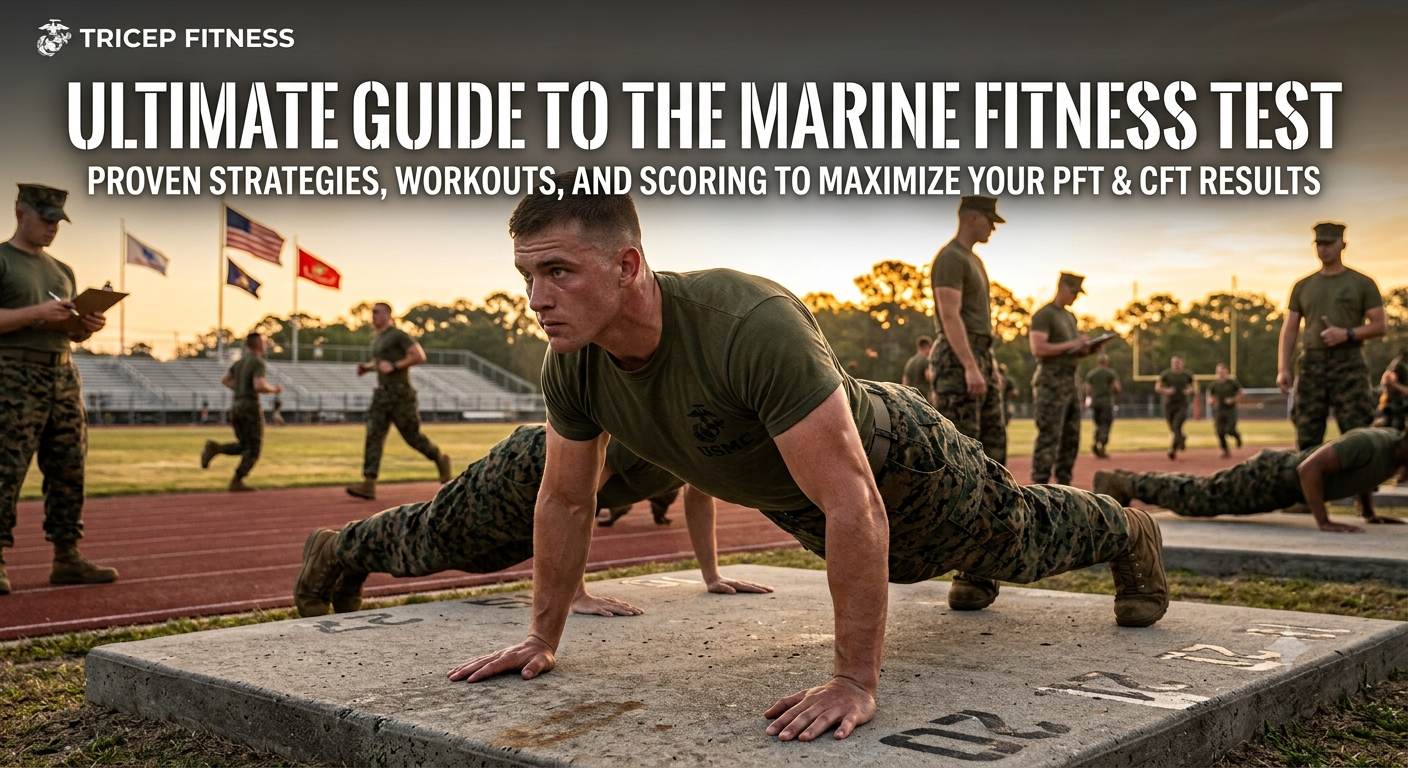
The Marine Physical Fitness Test (PFT) is the absolute bedrock of physical readiness in the United States Marine Corps. Designed to evaluate a Marine’s stamina, upper-body muscular strength, and core endurance, the PFT is not merely an annual requirement—it directly impacts promotion speed, career longevity, and military performance. Whether you are an aspiring recruit heading to Recruit Training, a Officer Candidates School (OCS) applicant, or an active-duty Marine aiming for a perfect 300 score, understanding every detail of the Marine PFT is critical.
This comprehensive guide breaks down the official events, scoring criteria, age-graded standards, and an actionable 8-week training program to ensure you crush your fitness assessment.
What is the Marine Physical Fitness Test (PFT)?
The Marine Physical Fitness Test is a mandatory evaluation administered to all active-duty and reserve Marines at least once per calendar year (typically during the first half of the year, while the Combat Fitness Test, or CFT, occurs in the second half).
The test measures functional physical capability across three distinct categories:
-
Upper-Body Pull Strength: Pull-ups or Push-ups
-
Core Endurance: Abdominal Plank
-
Cardiorespiratory Fitness: 3-Mile Aerobic Run
Every Marine receives a cumulative score ranging from 40 to 300 points based on performance across these three events.
Official Marine PFT Components and Rules
To maximize your score, you must strictly adhere to USMC testing protocol. Form errors result in uncounted repetitions and lost points.
1. Upper Body: Pull-Ups vs. Push-Ups
Marines have the choice between performing pull-ups or push-ups. However, selecting push-ups limits the maximum score attainable on this event to 40 out of 100 points, whereas pull-ups allow for the full 100-point potential.
-
Pull-Up Standards:
-
Execution: Begin in a dead-hang position with arms fully extended. Pull up until the chin clears the top of the bar completely. Lower yourself back down into a full dead-hang before starting the next rep.
-
Grip: Overhand (pronated) or underhand (supinated / chin-up style) are both authorized.
-
Rest: No momentum, swinging, kipping, or resting legs on the structure is permitted.
-
-
Push-Up Standards:
-
Execution: Start in a high plank position with arms straight. Lower the body until elbows form a 90-degree angle, then push back up until arms are fully extended.
-
Time Limit: 2 minutes.
-
2. Core Strength: The Abdominal Plank
In recent policy updates, the Marine Corps phased out traditional sit-ups/crunches to protect lower-back health, making the abdominal plank the mandatory core assessment for all Marines.
-
Execution: Place forearms and toes on the deck. Forearms must remain parallel or touching, with hands flat or in fists.
-
Form: Maintain a straight line from head to heels. Sagging hips, arched backs, or resting knees on the deck will pause or terminate the attempt.
-
Maximum Time: Holding a plank for 3 minutes and 45 seconds earns a maximum core score of 100 points across all age groups.
3. Cardiorespiratory Endurance: The 3-Mile Run
The final event tests sustained aerobic performance over a timed 3-mile (4.82 km) outdoor course on flat terrain or roadways.
-
Execution: Outdoor running on a measured course. Treadmills or indoor tracks are not permitted unless extreme weather conditions mandate an authorized indoor alternative.
-
Pacing Strategy: Scoring varies significantly by age and gender, but a sub-18-minute 3-mile run is generally required for younger male Marines seeking a max score, while female Marines require a sub-21-minute run for max points.
USMC PFT Scoring System and Classification
To pass the Marine PFT, Marines must achieve at least the minimum passing standard in each individual event and meet an aggregate total score based on their age group.
PFT Classification Categories
Total scores fall into three classification tiers:
| Classification Tier | Score Range | Notes |
| First Class PFT | 235 – 300 points | Highly competitive; necessary for fast-track promotion |
| Second Class PFT | 200 – 234 points | Average standard |
| Third Class PFT | 120 – 199 points | Minimum passing range (varies slightly by age) |
Minimum vs. Maximum Standards (Males Aged 17–20)
-
Pull-Ups: Minimum 4 reps | Maximum 20 reps (100 pts)
-
Plank: Minimum 1:10 | Maximum 3:45 (100 pts)
-
3-Mile Run: Minimum 27:40 | Maximum 18:00 (100 pts)
Minimum vs. Maximum Standards (Females Aged 17–20)
-
Pull-Ups: Minimum 1 rep | Maximum 9 reps (100 pts)
-
Plank: Minimum 1:10 | Maximum 3:45 (100 pts)
-
3-Mile Run: Minimum 30:50 | Maximum 21:00 (100 pts)
(Note: Scoring standards adjust incrementally every 5 years past age 20 to account for physiological changes.)
Proven 8-Week Marine PFT Workout Plan
To significantly increase your pull-up count, core endurance, and running speed, follow this targeted 8-week training split structured specifically around the Marine physical fitness test requirements.
Weekly Structure:
Monday: Pull-Up Power & High-Intensity Run
Tuesday: Core Endurance & Zone 2 Base Run
Wednesday: Active Recovery / Mobility
Thursday: Volume Pull-Ups & Tempo Run
Friday: Core Stability & Long Slow Run
Saturday: Mock PFT Practice
Sunday: Rest Day
Phase 1: Weeks 1–4 (Volume & Foundation)
-
Pull-Up Ladder Method (3x per week):
-
Perform 5 sets using the 1-2-3-4-5 ladder structure. Rest 60 seconds between sets.
-
Add negative pull-ups (5-second slow lowering phase) at the end of each workout to build eccentric strength.
-
-
Plank Progression:
-
3 sets of 2-minute planks with 45 seconds rest. Work up to adding weighted vests or plates as stability improves.
-
-
3-Mile Run Conditioning:
-
Intervals: 8x 400m sprints at goal 3-mile pace with 90 seconds walking rest.
-
Base Runs: 4-mile slow, conversational pace run once per week.
-
Phase 2: Weeks 5–8 (Peak Performance & Speed)
-
Weighted Pull-Ups:
-
Perform 4 sets of 3–5 reps with a 10–15 lb weight belt or weighted vest to build explosive power. Follow immediately with 1 burnout set of bodyweight pull-ups.
-
-
Plank Overload:
-
4 sets of 3-minute planks. Focus on active engagement: squeezing glutes, quads, and core continuously.
-
-
Tempo & Speed Runs:
-
Tempo Run: 2 miles at 15 seconds faster than your target 3-mile pace.
-
Intervals: 4x 800m repeats at max effort.
-
Key Tactical Tips to Maximize Your PFT Score
-
Grease the Groove for Pull-Ups: Set up a pull-up bar in your doorway. Perform 50% of your max pull-up reps every time you walk past it throughout the day. This greases the neuromuscular pathway without taxing your central nervous system.
-
Master Active Plank Engagement: Don’t just hang on your joints. Actively pull your elbows toward your toes and squeeze your glutes. This creates full-body tension, making a 3:45 plank significantly easier.
-
Pace the 3-Mile Run Properly: Avoid sprinting the first 800 meters. The most common error candidates make is burning out in mile 1. Aim for even or negative splits (running each mile slightly faster than the previous one).
-
Hydrate and Carbo-Load Responsibly: Begin increasing electrolyte and fluid intake 48 hours prior to test day. Ensure adequate glycogen storage through light complex carbohydrates the evening before.
Frequently Asked Questions (FAQs)
What is a passing score on the Marine Physical Fitness Test?
To pass the Marine PFT, you must score at least 120 total points (varies slightly based on age and gender brackets) and hit the minimum requirement in all three individual events. However, competitive Marines generally aim for a First Class PFT score of 235 or higher.
Can you choose push-ups instead of pull-ups on the USMC PFT?
Yes, Marines can opt to perform push-ups instead of pull-ups. However, doing push-ups caps your maximum possible score for that event at 40 points out of 100, making it impossible to earn a perfect overall score of 300.
What is the maximum plank time for the Marine PFT?
The maximum score of 100 points on the plank event requires holding a clean forearm plank for 3 minutes and 45 seconds. This standard is uniform across all age groups and genders.
How often do Marines take the Physical Fitness Test?
Active-duty and Reserve Marines take the PFT once per calendar year, typically during the first half of the year (January 1 to June 30). During the second half of the year, Marines complete the Combat Fitness Test (CFT).
What is the average 3-mile run time for the Marine Corps PFT?
While minimum passing run times start around 27:40 for young male Marines and 30:50 for young female Marines, achieving a top-tier First Class score usually requires running the 3 miles in under 20:00 (males) or under 23:00 (females). A perfect 100 points requires an 18:00 3-mile for males and 21:00 for females in the youngest age bracket.