10 Best Apps for Fitness at Home in 2026: Expert Tested & Reviewed
Title: 10 Best Apps for Fitness at Home in 2026: Expert Tested & Reviewed
Meta Description: Looking for the best app for fitness at home? Compare top-rated free and paid home workout apps for strength training, yoga, bodyweight circuits, and personalized AI coaching.
Slug: best-app-for-fitness-at-home
Tags: best app for fitness at home, home workout apps, best free workout app, bodyweight workout app, home fitness app 2026, personalized fitness app, top workout apps
10 Best Apps for Fitness at Home in 2026: Expert Tested & Reviewed
Maintaining a consistent exercise routine no longer requires an expensive gym membership or hours spent commuting during peak hours. The rapid evolution of mobile technology, wearable integration, and artificial intelligence has made it possible to access world-class personal training directly from your living room.
However, with thousands of options available on iOS and Android, finding the best app for fitness at home tailored to your specific goals, budget, and fitness level can feel overwhelming. Whether your objective is to build lean muscle with minimal equipment, improve flexibility through guided yoga, or burn calories using high-intensity bodyweight circuits, there is a dedicated platform designed to keep you motivated and accountable.
This comprehensive guide evaluates the top home workout applications in 2026 based on exercise variety, user experience, tracking accuracy, and overall value.
What Makes a Great Home Workout App?
Before selecting an application, it helps to understand the core features that separate industry-leading platforms from basic video repositories.
-
Goal Customization: A superior app adjusts workouts according to your current fitness level, available equipment, and target timeline.
-
Progress Tracking & Metrics: Seamless integration with smartwatches, heart rate monitors, and body tracking systems ensures accurate tracking of workout intensity, heart rate zones, and personal records.
-
Exercise Variety & Progression: Access to diverse workout styles—such as strength training, HIIT, mobility, and Pilates—prevents plateaus and keeps routines fresh.
-
Form Guidance & Safety: High-definition video instruction, multi-angle demonstrations, and audio cues reduce injury risk when training without in-person supervision.
-
Flexibility with Equipment: The best platforms accommodate everything from zero-equipment bodyweight setups to fully equipped home gyms.
Top Home Workout Apps at a Glance
| App Name | Primary Focus | Best For | Pricing Tier | Wearable Integration |
| Nike Training Club | Guided Multi-Discipline | Best Overall Free App | 100% Free | Apple Watch, Wear OS |
| FitOn | Social & On-Demand Classes | Best for Beginners & Variety | Free (Optional Pro Upgrade) | Apple Watch, Fitbit, Garmin |
| Fitbod | Algorithmic Strength Training | Best for Progressive Muscle Gain | Paid Subscription | Apple Watch, Wear OS |
| Apple Fitness+ | Guided Studio Workouts | Best for Apple Ecosystem Users | Paid Subscription | Apple Watch (Required/Ideal) |
| Peloton App | High-Energy Cardio & Strength | Best On-Demand Studio Classes | Paid Subscription | Heart Rate Monitors, Wearables |
| Freeletics | AI Bodyweight HIIT | Best for Equipment-Free Training | Paid Subscription | Apple Watch, Google Fit |
| Sweat | Women-Focused Strength & HIIT | Best Structured Multi-Week Programs | Paid Subscription | Apple Watch |
In-Depth Reviews: The Best Apps for Home Workouts
1. Nike Training Club (NTC) — Best Overall Free Fitness App
Nike Training Club remains a gold standard in the digital fitness space by offering its complete library of workouts completely free of charge.
NTC provides over 200 professionally designed routines spanning functional strength, bodyweight HIIT, yoga, core conditioning, and mobility recovery sessions. Workouts range from 5-minute quick routines to comprehensive 45-minute structured sessions led by master trainers.
Key Features:
-
Complete access to all multi-week training programs without paywalls.
-
Excellent filtering options based on muscle groups, available equipment, workout duration, and intensity level.
-
Audio and visual form guidance with clear timer prompts.
-
Offline download capabilities for workouts on the go.
Ideal User: Anyone looking for a premium, non-subscription home fitness solution that offers professional instruction across various workout styles.
2. FitOn — Best Free App for Variety and Social Motivation
If monotony is your primary barrier to consistent home exercising, FitOn offers a massive, fast-updating library of video classes led by celebrity trainers and certified fitness coaches.
FitOn covers cardio, Pilates, dance workouts, barre, strength, and mindfulness sessions. The free tier provides unlimited access to video workouts, making it an accessible option for beginners and budget-conscious individuals.
Key Features:
-
On-demand workouts requiring zero equipment.
-
Integrated social features to challenge friends and join community leaderboards.
-
Short, high-intensity workouts ranging from 10 to 25 minutes.
-
Integrated meal planning and nutrition guidance available in the Pro tier.
Ideal User: Beginners and busy professionals who want short, high-energy video classes with strong community engagement.
3. Fitbod — Best App for At-Home Strength Building
For individuals focused on progressive overload and building strength at home, Fitbod uses an intelligent algorithm to design custom workout plans based on your individual recovery rates, available equipment, and fitness goals.
Unlike static workout apps, Fitbod dynamically adapts your sets, reps, and target weights each workout. If you only have a pair of adjustable dumbbells or resistance bands, Fitbod builds an effective workout around those exact tools.
Key Features:
-
Muscle recovery heatmaps showing which muscle groups are rested and ready to train.
-
Automatic progression tracking using maximum weight calculations and volume history.
-
Over 1,400 exercise video demonstrations with step-by-step biomechanical form tips.
-
Seamless syncing with Strava, Apple Health, and Google Fit.
Ideal User: Intermediate to advanced lifters looking to build targeted strength and muscle tone at home without hiring a personal trainer.
4. Apple Fitness+ — Best Integrated Experience for iOS Users
For users within the Apple ecosystem, Apple Fitness+ offers a polished, studio-style workout experience. The service streams high-definition studio classes led by energetic, inclusive trainers across 12 distinct workout modalities, including HIIT, strength, kickboxing, rowing, treadmill, yoga, and meditation.
Its standout feature is real-time metric integration. When paired with an Apple Watch, your live heart rate, calories burned, and Activity Rings appear directly on your phone, iPad, or TV screen.
Key Features:
-
Dynamic visual integration with Apple Watch metrics on-screen.
-
Custom Plan builder that creates weekly workout schedules based on your preferences.
-
Curated playlists powered by Apple Music.
-
Family Sharing support for up to five family members under one subscription.
Ideal User: iPhone and Apple Watch owners who enjoy high-production video classes with curated music soundtracks.
5. Freeletics — Best AI-Driven Bodyweight Training App
When you have zero exercise equipment and minimal space, Freeletics excels. This application utilizes an advanced AI digital coach that creates high-intensity bodyweight circuits tailored to your real-time performance feedback and physical space constraints.
After every workout, you report how challenging the session felt and whether your form was stable. The AI coach adapts subsequent workouts accordingly, ensuring you are constantly challenged without reaching burnout.
Key Features:
-
“Quiet Mode” options to select workouts that minimize jumping for apartment dwellers.
-
Adaptable sessions based on available time (15, 30, or 45-minute limits).
-
Community feed with millions of users for motivation and global challenges.
-
Progressive bodyweight skills tracking (e.g., mastering pull-ups, pistol squats, or handstands).
Ideal User: Travelers, apartment residents, and minimalists who want challenging calisthenics routines without purchasing equipment.
6. Sweat — Best Fitness App Designed for Women
Co-founded by fitness trainer Kayla Itsines, Sweat is a premier home fitness application specifically designed for women’s health and strength goals. The app hosts dozens of multi-week training programs spanning post-pregnancy recovery, low-impact barre, high-intensity plyometrics, and heavy resistance training.
Key Features:
-
Step-by-step exercise substitution options if you lack specific home equipment.
-
Comprehensive meal plans, recipe ideas, and nutritional tracking.
-
Active community forums providing feedback, encouragement, and accountability.
-
Dedicated beginner programs built to build baseline stability safely.
Ideal User: Women seeking structured, multi-week workout blueprints with clear instructional pathways and strong peer support.
How to Select the Right App for Your Home Workouts
Choosing the best app for fitness at home requires matching software capabilities with your personal training environment and lifestyle. Consider these four steps before subscribing:
Step 1: Audit Your Equipment ➔ Do you own dumbbells/bands, or do you need bodyweight-only routines?
Step 2: Define Your Preferred Format ➔ Do you prefer video follow-along classes or self-paced exercise logs?
Step 3: Test Free Trials ➔ Utilize 7-day trials to test trainer teaching styles and app user interfaces.
Step 4: Verify Tech Compatibility ➔ Ensure the app syncs cleanly with your smartwatch or smart TV setup.
-
Assess Your Home Gym Setup: If you have dumbbells, kettlebells, or a pull-up bar, platforms like Fitbod or Nike Training Club let you filter routines around your gear. If you rely on floor space alone, prioritize Freeletics or FitOn.
-
Determine Your Motivation Style: If you draw energy from music, coaches, and studio environments, on-demand video platforms (Peloton, Apple Fitness+) are ideal. If you prefer listening to your own podcasts while recording sets, logging apps like Fitbod offer better focus.
-
Commit to Consistency Over Intensity: A 20-minute daily routine tracked via an app yields far better long-term muscle retention and cardiovascular endurance than an unsustainable 90-minute routine performed once a week.
Tips to Maximize Results from At-Home Fitness Apps
-
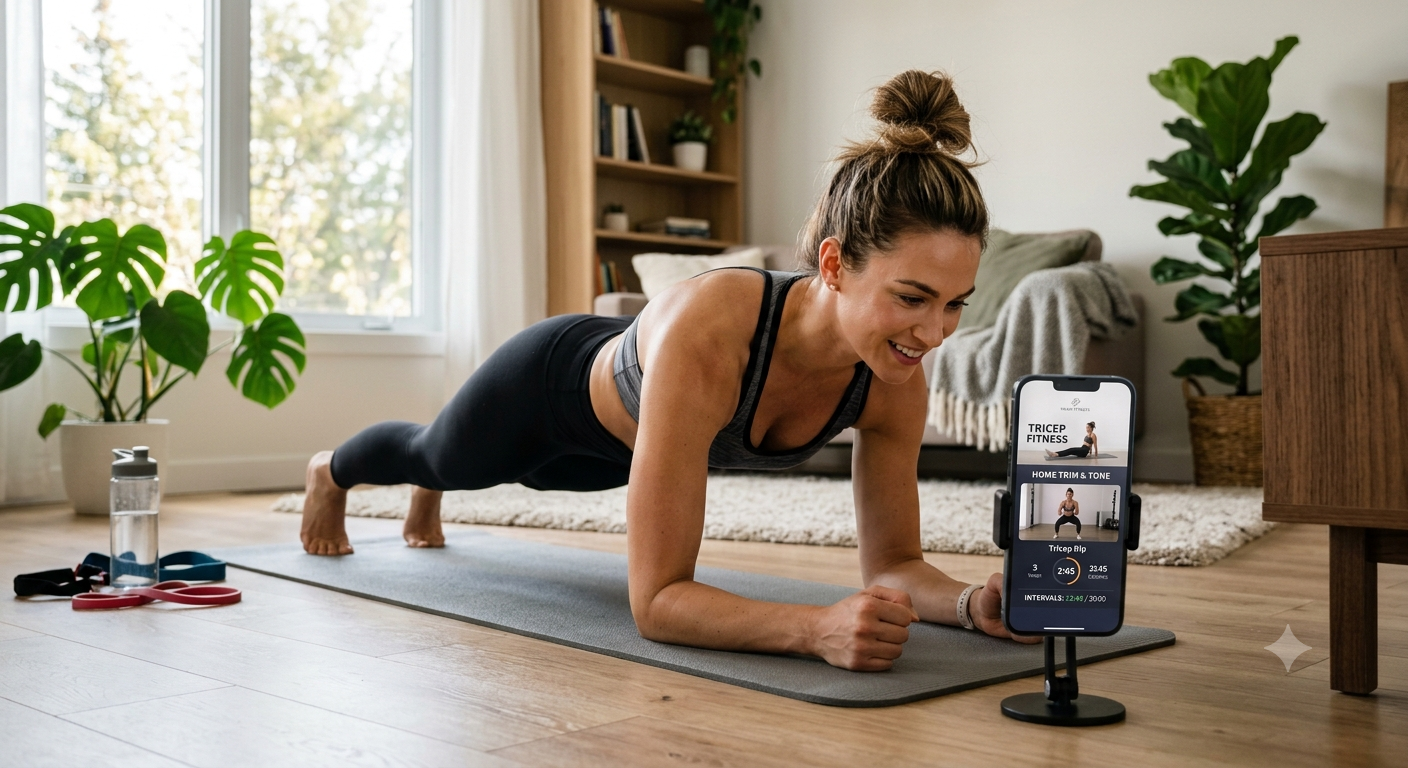
Designate a Dedicated Workout Zone: Keep your mat, resistance bands, and water bottle ready in a designated spot to lower friction when starting a session.
-
Schedule Workouts Like Appointments: Use the app’s built-in calendar sync features to set daily reminders.
-
Track Objective Metrics: Focus on measurable improvements—such as doing more repetitions, reducing rest times, or elevating your average heart rate—rather than relying solely on scale weight.
-
Prioritize Form Over Speed: When working out without an in-person trainer, watch instructional videos closely to protect your joints and target the intended muscle groups effectively.
Frequently Asked Questions
Can you really get fit using only home workout apps?
Yes. Studies show that consistent home workouts utilizing progressive bodyweight overload, resistance bands, or dumbbells can effectively improve cardiovascular capacity, build muscle hypertrophy, and promote fat loss. Consistency and proper intensity are far more critical than workout location.
Which is the best completely free home workout app?
Nike Training Club (NTC) is widely considered the best completely free home fitness app because it provides full, uninhibited access to all workouts, programs, and trainer guidance without hidden paywalls or ad interruptions. FitOn is another top contender offering robust free video content.
Do I need expensive gym equipment to use home workout apps?
No. Most top home fitness apps offer filtering options specifically for “No Equipment” or “Bodyweight Only” routines. Exercises like push-ups, lunges, squats, planks, and mountain climbers require zero equipment while delivering excellent conditioning results.
How often should I use a fitness app at home?
For most healthy adults, a balanced schedule consists of 3 to 5 sessions per week. This allows adequate stimulus for cardiovascular health and muscle development while providing 2 to 3 recovery days to prevent overtraining and joint fatigue.
How do home workout apps stay personalized to my progress?
Modern fitness apps utilize user feedback, completed workout logs, and wearable device integration (like Apple Watch or Garmin) to monitor heart rate, recovery times, and rep performance. Algorithms use this biometric data to dynamically adjust exercise difficulty for future sessions.