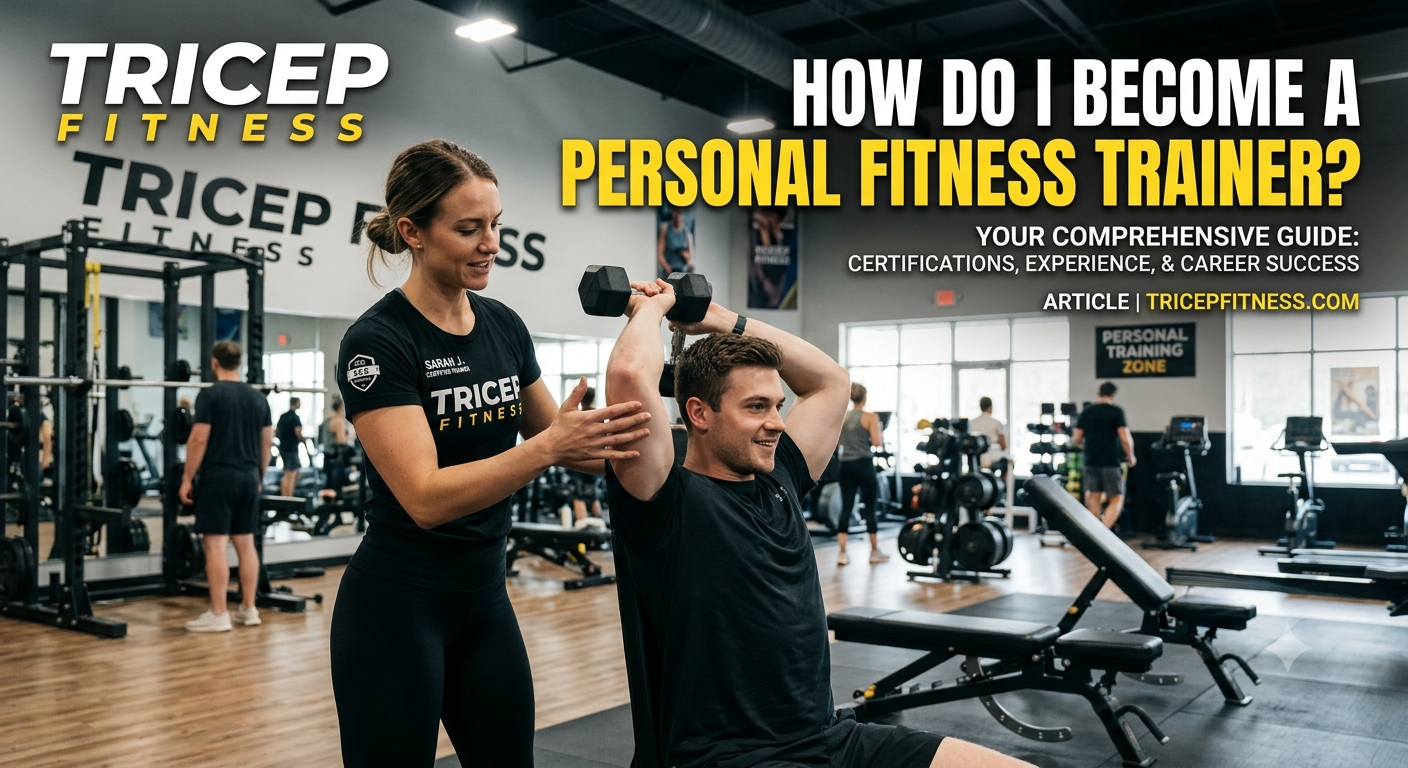
How to Become a Personal Fitness Trainer: Step-by-Step Professional Guide
Turning a passion for health and physical conditioning into a full-time profession is one of the most rewarding career choices in the modern wellness industry. However, moving from a gym enthusiast to a credentialed fitness professional requires specific educational steps, recognized accreditations, and business acumen.
Whether your goal is to coach clients in commercial gyms, launch a remote online training business, or open your own private facility, here is the exact roadmap to earning your certification and thriving as a certified personal trainer.
6 Steps to Become a Certified Personal Fitness Trainer
Step 1: Meet Core Prerequisites ➔ Step 2: Choose NCCA-Accredited Cert ➔ Step 3: Pass Exam ➔ Step 4: Pick Specialization ➔ Step 5: Gain Practical Experience ➔ Step 6: Acquire Clients & Build Business
Step 1: Fulfill the Fundamental Prerequisites
Before registering for any study course or exam, confirm that you meet the standard baseline requirements enforced by major certifying agencies.
-
Age Requirement: You must be at least 18 years old.
-
Education: A high school diploma or GED equivalent is mandatory.
-
Safety Certifications: You must hold active CPR (Cardiopulmonary Resuscitation) and AED (Automated External Defibrillator) certifications from a recognized provider (such as the American Red Cross or American Heart Association) prior to taking your exam.
Step 2: Select an NCCA-Accredited Certification Program
Employers, commercial health clubs, and insurance providers almost universally require a credential accredited by the National Commission for Certifying Agencies (NCCA). Choosing a non-accredited program risks limiting your employment options and client trust.
Step 3: Prepare for and Pass the Certification Exam
Most self-paced certification courses take between 8 to 12 weeks of dedicated study. Expect the exam to test your knowledge across key domains:
-
Human anatomy, biomechanics, and kinesiology.
-
Sub-maximal and maximal fitness assessments.
-
Exercise program design and periodization.
-
Client psychology, motivation, and behavioral change.
-
Risk management, professional scope of practice, and emergency protocols.
Step 4: Define Your Niche and Specialization
General personal training opens doors, but specialized expertise allows you to command higher hourly rates and target specific client demographics. Popular secondary credentials include:
-
Corrective Exercise Specialist (CES) – Postural rehabilitation and movement dysfunction.
-
Performance Enhancement Specialist (PES) – Athletic speed, agility, and power development.
-
Fitness Nutrition Specialist (FNS) – Dietary guidance and meal planning within scope.
-
Senior or Youth Fitness Specialist – Population-specific exercise adaptations.
Step 5: Gain Practical Experience & Internship Hours
Book knowledge must be paired with real-world coaching. Shadowing established trainers, working as a floor instructor at a local health club, or assisting senior coaches builds essential movement cueing, hands-on spotter safety, and communication skills.
Step 6: Launch Your Practice and Build a Client Roster
Once certified, decide between employment routes:
-
Commercial Gyms: High client volume, built-in equipment, structured environment (ideal for beginners).
-
Private Studios: Better split rates, focused community.
-
Online & Hybrid Coaching: Minimal overhead, global reach, scalable service packages.
-
Independent In-Home/Mobile Training: High price points, personalized client retention.
Comparing Top Personal Trainer Certifications
Selecting the right certification program depends on your career goals, budget, and preferred training methodology.
| Certification Agency | Primary Focus Area | Exam Format | Typical Cost Range | NCCA Accredited? | Best Suited For |
| NASM (National Academy of Sports Medicine) | Optimum Performance Training (OPT) Model, Corrective Exercise | 120–140 Multiple Choice Questions | $600 – $1,500 | Yes | Gym positions, corrective exercise, overall industry recognition |
| ACE (American Council on Exercise) | Behavioral Change, Fitness Psychology, Exercise Progression | 150 Multiple Choice Questions | $500 – $1,000 | Yes | General population coaching, group fitness, health coaching |
| ISSA (International Sports Sciences Association) | Comprehensive Fitness, Business Building, Nutrition Integration | Open-Book / Proctored Options | $600 – $1,200 | Yes (via NCCA option) | Flexible online learning, self-employed trainers, hybrid fitness |
| NSCA-CPT (National Strength & Conditioning) | Biomechanics, Athletic Strength, Tactical Conditioning | 150 Multiple Choice Questions | $400 – $800 | Yes | Sports performance, athletic preparation, strength development |
Key Skills Every Personal Trainer Must Master
Earning your certification proves baseline competency, but client retention and income growth rely on human skills.
┌────────────────────────────────────────────────────────────────────────┐
│                        CORE TRAINER COMPETENCIES                       │
├──────────────────────────────────┬─────────────────────────────────────┤
│ TECHNICAL MASTERY                │ INTERPERSONAL & BUSINESS            │
├──────────────────────────────────┼─────────────────────────────────────┤
│ • Biomechanics & Form Assessment │ • Active Listening & Empathy        │
│ • Custom Periodization Programs  │ • Behavioral Habit Coaching         │
│ • Injury Prevention Strategies   │ • Direct Sales & Value Pitching     │
│ • Nutritional Guidelines Scope   │ • Social Media & Personal Branding  │
└──────────────────────────────────┴─────────────────────────────────────┘
-
Active Listening & Communication: Understanding a client’s emotional motivation yields higher adherence than simply prescribing sets and reps.
-
Dynamic Program Adaptation: Modifying workouts on the fly when a client arrives fatigued, stressed, or dealing with joint discomfort.
-
Ethical Business Practices: Clear contracts, transparent cancellation policies, and professional boundaries build long-term retention.
Personal Trainer Salary and Earning Potential
Personal training earnings vary based on employment structure, geographic location, specialization, and online presence.
-
Entry-Level Commercial Gym Trainer: $20 – $35 per hour (often starting with base hourly rates plus session commission).
-
Experienced Independent Trainer: $50 – $120+ per hour (setting private rates and renting studio space).
-
Online Fitness Coach: $2,000 – $10,000+ per month (utilizing monthly recurring retainer billing).
5 Critical Mistakes New Personal Trainers Make
-
Focusing Only on Workouts, Not Business Skills: Being great at exercise science means little if you cannot generate leads or close sales.
-
Over-complicating Routine Designs: Beginners thrive on fundamental movement patterns (squat, hinge, push, pull, carry), not overly complex acrobatics.
-
Ignoring Scope of Practice: Diagnosing injuries or writing detailed medical diet plans crosses legal boundaries into physical therapy or registered dietetics.
-
Failing to Track Client Progress Data: Measurable metrics (strength logs, body composition, mobility improvements) keep clients motivated and retained long-term.
-
Skipping Continuing Education: Certifications require recertification every 2 years. Stagnant knowledge leads to outdated methods.
Frequently Asked Questions (FAQs)
How long does it take to become a personal fitness trainer?
Most individuals complete their certification in 2 to 6 months, depending on study speed, background knowledge, and the time devoted to exam preparation.
Can I become a certified personal trainer online?
Yes. Major organizations such as NASM, ACE, and ISSA offer complete online study portals, virtual study materials, and remotely proctored certification exams.
Do I need a college degree in kinesiology to be a personal trainer?
No college degree is legally required to work as a certified personal trainer. An NCCA-accredited certification, high school diploma/GED, and current CPR/AED certification are the industry-standard requirements for entry. However, a degree in exercise science can accelerate career advancement in collegiate or professional athletics.
How much does it cost to get certified as a personal trainer?
The total cost typically ranges from $400 to $1,500, depending on the study package, textbooks, practice tests, and exam fees selected.
Which personal trainer certification is most respected by employers?
Certifications accredited by the NCCA—such as NASM, ACE, and NSCA—are the most widely accepted by major health clubs, corporate wellness centers, and private training facilities.