Abductor Muscle Blueprint: Anatomy, Function, and Key Exercises for Hip Stability
SEO Metadata & Configuration
-
Focus Keyword: Abductor Muscle
-
SEO Title: Abductor Muscle Blueprint: Anatomy, Function, and Key Exercises for Hip Stability
-
Meta Description: Discover how the abductor muscle group stabilizes your pelvis, prevents knee pain, and boosts balance. Learn primary anatomy, daily functions, and top exercises.
-
Slug:
abductor-muscle-anatomy-exercises-stability -
Target Tags:
abductor muscle, hip abductors, gluteus medius, gluteus minimus, hip stability, hip abduction exercises, lateral hip pain, pelvic stability
Abductor Muscle Blueprint: Anatomy, Function, and Key Exercises for Hip Stability
When people discuss lower-body strength, heavy compound movements like squats and deadlifts take center stage. While building powerful quadriceps, hamstrings, and gluteal muscles is important, a vital muscle group often gets overlooked: the abductor muscle group.
Whether you are stepping sideways, getting out of a car, or stabilizing your lower body while walking, your hip abductors are actively working behind the scenes. They keep your pelvis level, protect your knees from collapsing inward, and maintain balance during movement. Weakness in these lateral muscles can cause a chain reaction of kinetic issues, leading to conditions like runner’s knee, lower back tightness, and hip instability.
This comprehensive guide breaks down the anatomy of the abductor muscles, explores their daily functions, provides targeted exercises to strengthen them, and outlines strategies to prevent common overuse injuries.
What Is an Abductor Muscle?
In human anatomy, an abductor is any muscle that draws a body part away from the body’s midline. The counterpart—an adductor—pulls limbs toward the center. For instance, spreading your fingers apart uses abductor muscles in your hands, while lifting your arm straight out to the side engages the abductor muscles in your shoulders (the deltoids).
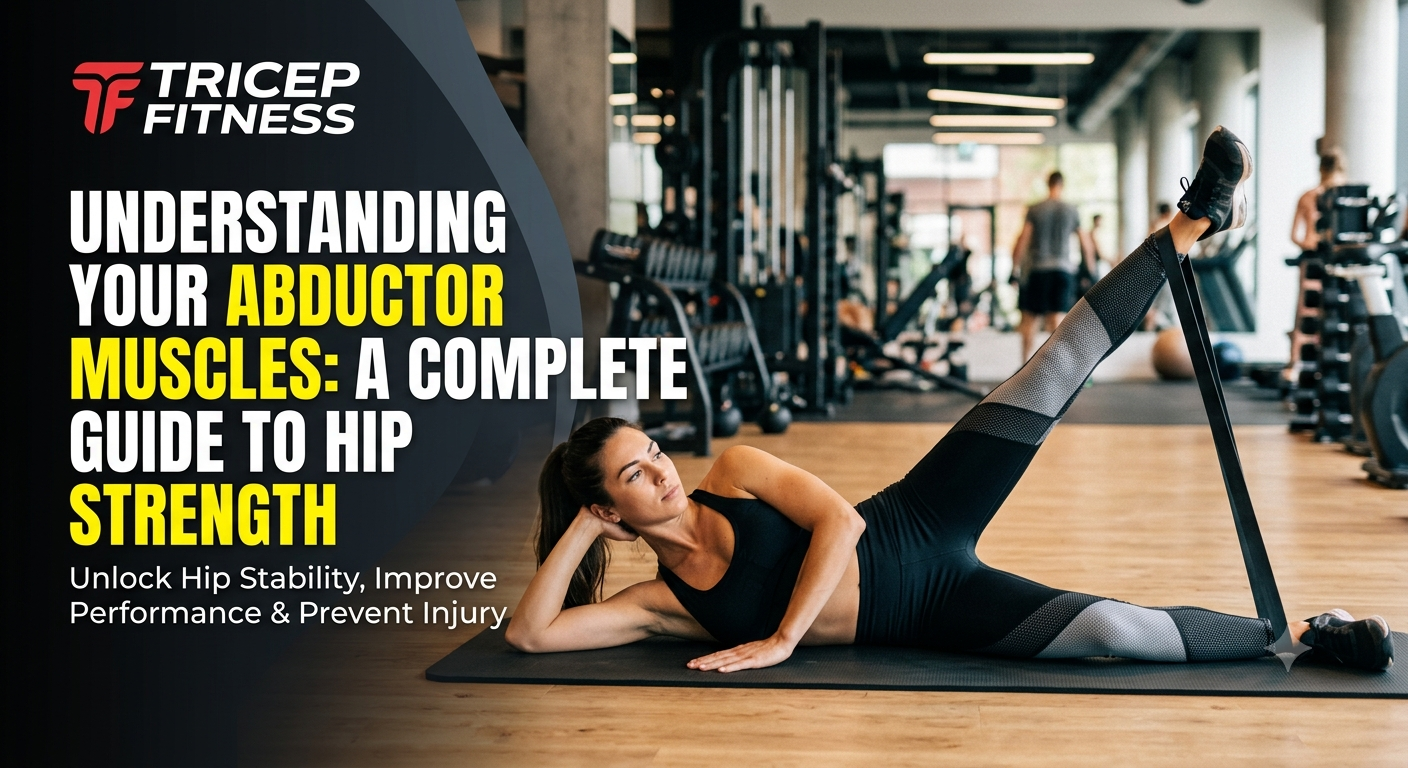
However, in sports science, physical therapy, and general fitness, the term abductor muscle most commonly refers to the hip abductors. Located on the lateral aspect of the hip and upper thigh, these muscles allow you to move your leg away from your body’s center.
                     +---------------------------+
                     |  The Abductor Muscle Group |
                     +---------------------------+
                                   |
         +-------------------------+-------------------------+
         |                         |                         |
+-----------------+       +-----------------+       +-----------------+
| Gluteus Medius  |       | Gluteus Minimus |       |  Tensor Fasciae |
|  (Primary)      |       |  (Deep Layer)   |       |   Latae (TFL)   |
+-----------------+       +-----------------+       +-----------------+
Anatomy of the Hip Abductor Muscle Group
The hip abductor complex consists of primary and secondary muscles that work together to mobilize the femur (thigh bone) and stabilize the pelvis.
1. Primary Hip Abductors
-
Gluteus Medius: This broad, fan-shaped muscle sits on the upper outer portion of the buttocks, beneath the gluteus maximus. It originates at the outer surface of the ilium (pelvic bone) and attaches to the greater trochanter of the femur. The gluteus medius is the primary engine behind hip abduction and holds your pelvis level when standing on one leg.
-
Gluteus Minimus: Situated directly beneath the gluteus medius, the gluteus minimus is the smallest of the main gluteal muscles. It shares similar attachment points and works alongside the medius to abduct the thigh and assist in internal rotation of the hip.
-
Tensor Fasciae Latae (TFL): Positioned on the front and side of the hip, the TFL originates near the iliac crest and feeds directly into the Iliotibial (IT) Band—a thick strip of connective tissue running down to the knee. The TFL assists in hip abduction, hip flexion, and stabilizing the knee joint.
2. Secondary Hip Abductors
While smaller or primary drivers for other movements, secondary muscles also aid in hip abduction:
-
Piriformis: A deep muscle located deep in the buttock, primary for external rotation, but acts as an abductor when the hip is flexed.
-
Sartorius: The longest muscle in the human body, running diagonally down the front of the thigh, aiding in combined abduction, flexion, and external rotation.
Critical Functions of the Abductor Muscle Complex
Understanding what these muscles do clarifies why keeping them strong matters for overall health and performance.
                     +----------------------------------+
                     |  Core Functions of Abduction     |
                     +----------------------------------+
                                      |
     +--------------------------------+--------------------------------+
     |                                |                                |
+------------------------+  +------------------------+  +------------------------+
| Pelvic Alignment       |  | Dynamic Knee Tracking  |  | Functional Locomotion  |
| Prevents pelvic drop   |  | Prevents knock-knee    |  | Supports balance during|
| during single stance   |  | valgus alignment       |  | walking & side-steps   |
+------------------------+  +------------------------+  +------------------------+
1. Pelvic Stabilization in Gait
When walking or running, you spend a substantial amount of time on a single leg. As your left foot leaves the ground, gravity pulls the left side of your pelvis downward. The right hip abductors contract dynamically to pull your right pelvis down, preventing the left side from dipping.
Without this mechanical check, your pelvis drops toward the unsupported side—a clinical sign known as the Trendelenburg sign.
2. Protecting Knee Health & Preventing Valgus Collapse
Weak hip abductors often cause the thigh bone (femur) to rotate inward and collapse toward the midline. This issue, called knee valgus (or knock-knee alignment), places severe strain on the anterior cruciate ligament (ACL) and patellofemoral joint. Strong abductors anchor the femur in proper alignment, protecting the knee joint.
3. Lateral Agility and Athletic Power
Any athletic movement requiring quick lateral cuts—such as basketball, soccer, tennis, or trail running—relies on hip abductors to generate lateral force and safely absorb directional changes.
Causes and Symptoms of Weak Hip Abductors
Sedentary lifestyles are a major cause of hip abductor weakness. Sitting for long periods keeps the hip flexors shortened and gluteal muscles inactive. Over time, this causes gluteal amnesia, where the brain struggles to properly recruit these muscles during physical movement.
Key Takeaway: Extended periods of sitting weaken the gluteus medius, forcing smaller secondary muscles to overcompensate. This shift often leads to lower back and knee discomfort.
Common Symptoms of Weakness
-
Lateral Hip Pain: Persistent aches over the greater trochanter (outer hip bone).
-
Knee Pain (Patellofemoral Pain Syndrome): Dull aches around or under the kneecap caused by improper tracking.
-
IT Band Syndrome: Stinging pain on the outside of the knee joint due to an overactive TFL overworking the IT band tissue.
-
Lower Back Stiffness: The lower back muscles (like the quadratus lumborum) work extra hard to compensate for a dipping pelvis during walking.
5 Effective Exercises to Strengthen Your Abductor Muscles
To build durable, stable hips, incorporate targeted abductor exercises into your routine 2 to 3 times per week.
Practical Programming: Integrating Abductor Training
How you structure hip abductor work depends on your training goals:
| Goal | Exercise Selection | Sets & Reps | Frequency |
| Rehabilitation & Physical Therapy | Clamshells, Side-Lying Lifts | 2–3 Sets of 15–20 Reps | Daily or 4x/week |
| Strength & Power (Athletes) | Heavy Banded Walks, Cable Abductions | 3–4 Sets of 8–12 Reps | 2–3x/week |
| General Fitness & Injury Prevention | Monster Walks, Side Planks | 3 Sets of 12 Reps | 2x/week |
Frequently Asked Questions (FAQs)
What is the main difference between abductor and adductor muscles?
Abductor muscles move your limbs away from the midline of your body (e.g., raising your leg sideways). Adductor muscles move your limbs toward the midline (e.g., squeezing your thighs together). Both groups work together to maintain balance and hip stability.
Why do my hip abductors feel tight or painful after running?
Running requires continuous single-leg balance, putting significant demand on the gluteus medius. If these muscles are weak, they tire quickly during long runs, causing strain, inflammation, or tightness in the outer hip and IT band.
Can strong abductors help relieve lower back pain?
Yes. When hip abductors are weak, the pelvis tilts unevenly while walking. The muscles in your lower back compensate by pulling harder to keep you upright, causing muscle fatigue. Strengthening the abductors stabilizes the pelvis and reduces stress on the lower back.
How often should I train my hip abductor muscles?
For general stability and injury prevention, targeted abductor training 2 to 3 times per week works well. You can perform light bodyweight exercises like clamshells as part of your dynamic warm-up before leg workouts or runs.
Is the seated hip abductor machine effective?
Yes, the machine isolates the gluteus medius and minimus, making it a good choice for building baseline strength. However, combining machine work with functional, standing movements (like monster walks or single-leg exercises) helps train these muscles to stabilize your weight during daily activities.
This video provides a deep visual breakdown of hip abduction mechanics, detailing muscle activation patterns and proper form to keep your hips strong and stable:
Understanding Hip Abduction Anatomy and Exercises
This video directly complements the anatomical structures covered in this article, demonstrating how the gluteus medius and TFL function in motion.