

Muscle Fatigue Explained: Causes, Prevention & Quick Recovery Tips
Introduction
Muscle fatigue is a universally experienced physiological phenomenon characterized by a temporary decline in a muscle’s ability to generate maximal force or power. Whether it occurs toward the end of an intense weightlifting set, during the final mile of a marathon, or as a result of prolonged physical labor, muscle fatigue affects athletes, fitness enthusiasts, and sedentary individuals alike Anti Smooth Muscle Antibody .
While commonly viewed as a limitation or a sign of exhaustion, muscle fatigue actually serves a critical biological function: it acts as a protective mechanism designed to prevent irreversible structural damage to muscle tissues and vital systems. Understanding the mechanisms behind muscle fatigue, distinguishing its types, and implementing evidence-based recovery strategies are essential for optimizing performance, preventing injury, and maintaining long-term physical health.
The Physiology of Muscle Contraction and Energy Production
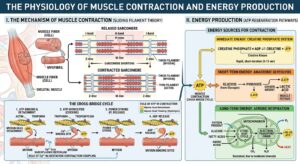
To understand why muscles become fatigued, it is necessary to first look at how they produce movement. Muscle contraction is powered by adenosine triphosphate (ATP), the primary energy currency of human cells. When a neural signal reaches a muscle fiber, it triggers a chain of biochemical events:
-
Sarcoplasmic Reticulum Activation: Calcium ions ($\text{Ca}^{2+}$) are released into the sarcoplasm.
-
Cross-Bridge Cycling: Calcium binds to troponin, exposing binding sites on actin filaments. Myosin heads then attach to actin, performing a “power stroke” powered by the breakdown of ATP into adenosine diphosphate (ADP) and inorganic phosphate ($\text{P}_i$).
-
Relaxation and Reset: Additional ATP is required to detach the myosin head and pump calcium back into storage.
Because muscle cells store only a tiny amount of ready-to-use ATP, they must continuously generate it through three distinct energy systems:
-
Phosphagen (ATP-PCr) System: Supplies immediate energy for short, explosive bursts of activity (lasting 0–10 seconds) using stored phosphocreatine.
-
Anaerobic (Glycolytic) System: Breaks down glucose without oxygen for short-to-medium duration, high-intensity efforts (lasting 10–120 seconds).
-
Aerobic (Oxidative) System: Uses oxygen to break down carbohydrates, fats, and occasionally proteins for prolonged, low-to-moderate intensity efforts.
When the demand for ATP outstrips the body’s rate of production, or when metabolic byproducts accumulate faster than they can be cleared, muscle fatigue begins to set in.
Central vs. Peripheral Muscle Fatigue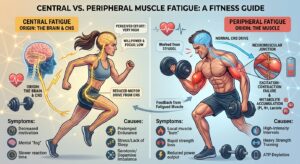
Exercise physiologists categorize muscle fatigue into two distinct categories based on where the functional decline originates: central fatigue and peripheral fatigue.
                            ┌─────────────────────────────────┐
                            │         Muscle Fatigue          │
                            └────────────────┬────────────────┘
                                             │
                   ┌─────────────────────────┴─────────────────────────┐
                   ▼                                                   ▼
┌──────────────────────────────────────┐            ┌──────────────────────────────────────┐
│           Central Fatigue            │            │          Peripheral Fatigue          │
├──────────────────────────────────────┤            ├──────────────────────────────────────┤
│ • Originates in Central Nervous      │            │ • Originates at Neuromuscular        │
│   System (Brain & Spinal Cord)       │            │   Junction & Muscle Fibers           │
│ • Impaired neural drive to muscles   │            │ • Metabolic byproduct accumulation   │
│ • Neurotransmitter imbalance         │            │ • Substrate/Glycogen depletion       │
│ • Psychological & central protection │            │ • Excitation-contraction coupling    │
│   mechanisms                         │            │   failure                            │
└──────────────────────────────────────┘            └──────────────────────────────────────┘
1. Central Fatigue
Central fatigue originates in the central nervous system (CNS), specifically involving the brain and spinal cord. It refers to a reduction in the neural drive sent from the motor cortex to the target muscles. Even if the muscle fibers themselves remain capable of contracting, the brain intentionally lowers the intensity or frequency of motor signals. Key factors contributing to central fatigue include:
-
Neurotransmitter Alterations: Changes in the brain’s levels of serotonin, dopamine, and gamma-aminobutyric acid (GABA) during prolonged exertion alter perception of effort and reduce motivation.
-
Inflammatory Cytokines: Sustained exercise increases systemic circulating cytokines (such as IL-6), which signal the brain to downregulate physical output.
-
Protective Downregulation: The brain acts as a governor, slowing down muscle contraction to preserve core homeostatic balance and protect vital organs from heat stroke or extreme metabolic exhaustion.
2. Peripheral Fatigue
Peripheral fatigue occurs downstream of the CNS, directly within the neuromuscular junction, the sarcolemma (muscle cell membrane), or the contractile apparatus itself. It is driven primarily by local cellular disruption and metabolic strain. Mechanisms include:
-
Accumulation of Metabolic Byproducts: The breakdown of ATP yields inorganic phosphate ($\text{P}_i$) and hydrogen ions ($\text{H}^+$). Accumulation of $\text{P}_i$ inhibits force production by directly interfering with myosin-actin cross-bridge formation and reducing calcium sensitivity.
-
Acidosis (Lowered pH): Contrary to popular myth, lactic acid itself does not directly cause muscle burning or long-term fatigue. Rather, anaerobic glycolysis produces hydrogen ions, which lower muscular pH (acidosis). This acidic environment impairs key glycolytic enzymes and interferes with calcium binding.
-
Failure of Excitation-Contraction Coupling: Repeated muscle depolarizations cause potassium ($\text{K}^+$) to leak out of muscle fibers into the t-tubules, disrupting the electrical signal needed to release stored calcium.
-
Substrate Depletion: Running out of intramuscular glycogen or phosphocreatine deprives the cross-bridge cycle of the fuel needed to regenerate ATP.
Common Causes and Risk Factors
Beyond basic exercise physiology, several broader biological, behavioral, and clinical factors accelerate the onset of muscle fatigue.
Exercise Intensity and Duration
The type of activity directly dictates the primary driver of fatigue:
-
High-Intensity, Short-Duration (e.g., Sprinting, Heavy Powerlifting): Dominated by rapid phosphocreatine depletion, $\text{P}_i$ accumulation, and local muscular acidosis.
-
Low-Intensity, Long-Duration (e.g., Marathons, Ultramarathons): Driven by muscle glycogen depletion, excitation-contraction coupling degradation, structural muscle damage, and central fatigue.
Dehydration and Electrolyte Imbalances
Water is vital for intracellular transport, nutrient delivery, and thermoregulation. Sweating depletes intracellular and extracellular fluid, while also stripping key electrolytes—sodium, potassium, magnesium, and calcium.
Electrolytes regulate membrane potentials and facilitate action potentials across nerve cells and muscle fibers. A loss of fluid equivalent to just 2% of body weight can significantly reduce physical endurance and speed up muscle fatigue.
Inadequate Nutrition
Muscles rely heavily on dietary carbohydrates to maintain intramuscular glycogen stores. Low-carbohydrate intake or inadequate total caloric consumption lowers energy availability, forcing muscles to rely on less efficient metabolic pathways and hastening energy failure.
Sleep Deprivation and Poor Recovery
Sleep is the primary window for endocrine tissue repair, growth hormone release, and systemic recovery. Chronic sleep debt reduces muscle glycogen synthesis, raises baseline cortisol (a catabolic hormone), and exacerbates central fatigue by impairing neural drive.
Clinical Conditions and Deficiencies
When muscle fatigue occurs without strenuous exertion, it may point to an underlying medical issue, including:
-
Anemia (Iron Deficiency): Lowers hemoglobin concentration, reducing oxygen delivery to working muscle tissue.
-
Thyroid Disorders: Hypothyroidism slows metabolic rate and cellular energy production.
-
Vitamin D Deficiency: Vitamin D receptors in skeletal muscle play an essential role in mitochondrial function and calcium handling.
-
Chronic Fatigue Syndrome (ME/CFS) and Fibromyalgia: Pathological states marked by systemic energy dysregulation and persistent neuromuscular exertion intolerance.
Symptoms and Signs of Muscle Fatigue
Recognizing the signs of muscle fatigue allows athletes and active individuals to adjust intensity before acute fatigue transitions into chronic strain or injury.
| Symptom Category | Specific Sign | Physiological Mechanism |
| Mechanical Performance | Reduced force output | Inability of myosin heads to perform power strokes efficiently due to accumulated $\text{P}_i$. |
| Slower contraction/relaxation velocity | Impaired calcium reuptake into the sarcoplasmic reticulum. | |
| Neuromuscular Control | Involuntary muscle twitching or fasciculations | Altered motor neuron excitability and electrolyte imbalances at the sarcolemma. |
| Loss of fine motor coordination | Decreased central neural drive and uneven motor unit recruitment. | |
| Sensory Perception | Localized burning sensation | Accumulation of hydrogen ions ($\text{H}^+$) stimulating metabolic nociceptors (pain fibers). |
| Heaviness in limbs | Reduced motor unit firing rates coupled with central perception of effort. | |
| Post-Exercise State | Delayed Onset Muscle Soreness (DOMS) | Microscopic tearing of muscle fibers (sarcomeres) leading to localized inflammation over 24–72 hours. |
Evidence-Based Strategies for Prevention and Recovery
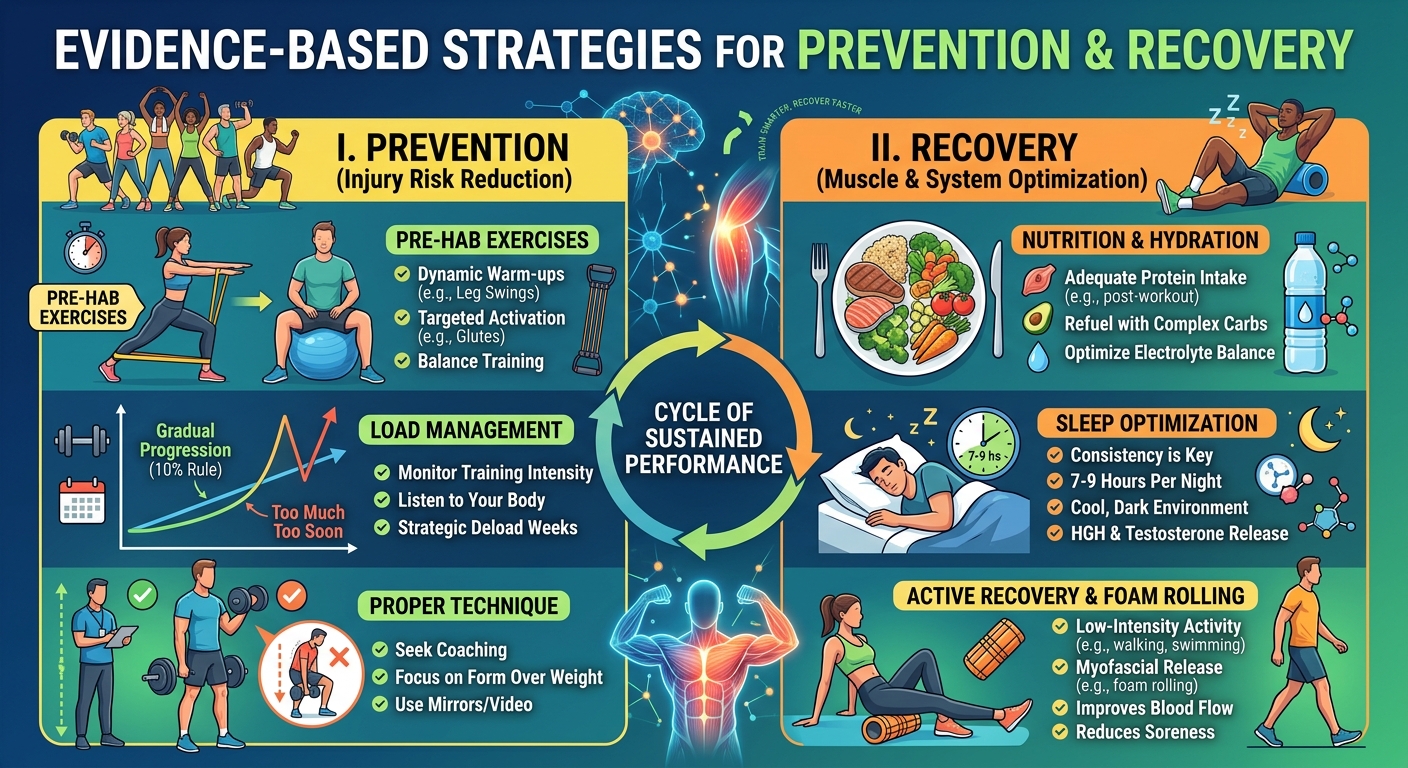
Managing muscle fatigue requires a two-pronged approach: optimizing preparation to delay its onset during activity, and employing targeted strategies to speed up post-exercise recovery.
Pre-Exercise and Intra-Exercise Prevention Strategies
-
Strategic Carbohydrate Fueling: Consume fast-digesting carbohydrates prior to and during endurance sessions lasting longer than 60–90 minutes (aiming for 30–60 grams of carbohydrate per hour). This preserves muscle glycogen and prevents blood glucose drops.
-
Proper Hydration and Electrolyte Management: Hydrate adequately in the hours leading up to exercise. During prolonged sessions or hot environments, drink fluids containing sodium and potassium to maintain plasma volume and neuromuscular signaling.
-
Structured Warm-ups: Perform dynamic movements that gradually elevate core body temperature and increase localized blood flow. Warm muscles display enhanced enzyme activity, faster cross-bridge cycling, and improved tissue compliance.
-
Targeted Ergogenic Supplementation:
-
Creatine Monohydrate: Increases intramuscular phosphocreatine stores, delaying fatigue during short, explosive efforts.
-
Beta-Alanine: Increases intramuscular carnosine levels, acting as a buffer against hydrogen ion accumulation during high-intensity efforts lasting 1–4 minutes.
-
Caffeine: Acts as a central nervous system stimulant, decreasing the perception of effort and blunting central fatigue.
-
Post-Exercise Recovery Strategies
                             ┌────────────────────────────────┐
                             │   Post-Exercise Recovery       │
                             └───────────────┬────────────────┘
                                             │
         ┌───────────────────────────────────┼───────────────────────────────────┐
         ▼                                   ▼                                   ▼
┌─────────────────┐                 ┌─────────────────┐                 ┌─────────────────┐
│ Active Recovery │                 │ Nutritional     │                 │ Sleep & Rest    │
│                 │                 │ Replenishment   │                 │                 │
│ • Low-intensity │                 │ • High-GI carbs │                 │ • 7-9 hours of  │
│   movement      │                 │   for glycogen  │                 │   quality sleep │
│ • Promotes blood│                 │ • Protein for   │                 │ • Parasympathetic│
│   flow & waste  │                 │   muscle repair │                 │   nervous system│
│   clearance     │                 │   (leucine)     │                 │   activation    │
└─────────────────┘                 └─────────────────┘                 └─────────────────┘
-
Active Recovery: Engaging in low-intensity movement (e.g., light walking, easy cycling) following heavy exercise maintains elevated blood flow. This accelerated circulation speeds up the clearance of metabolic waste products and delivers oxygen and nutrients to recovering tissues far faster than passive rest.
-
Post-Workout Nutrition:
-
Proteins: Consume 20–40 grams of high-quality protein containing essential amino acids (specifically leucine) within 1–2 hours after exercise to stimulate muscle protein synthesis and repair damaged fibers.
-
Carbohydrates: Pair protein with high-glycemic carbohydrates (1.0–1.2 g/kg of body weight) to rapidly restock depleted glycogen stores.
-
-
Prioritize Sleep: Quality sleep of 7 to 9 hours per night is non-negotiable. Deep non-REM sleep triggers the release of human growth hormone (HGH), which drives tissue repair, protein synthesis, and nervous system recovery.
-
Compression Garments and Hydrotherapy: Wearing graduation-compression garments or utilizing contrast water therapy (alternating hot and cold immersion) can help reduce post-exercise swelling, improve venous return, and lessen subjective feelings of soreness.
Frequently Asked Questions (FAQs)
1. Is muscle fatigue the same thing as Delayed Onset Muscle Soreness (DOMS)?
No. Muscle fatigue is the immediate, temporary reduction in a muscle’s force-generating capacity that occurs during or immediately after physical activity. Delayed Onset Muscle Soreness (DOMS) refers to the muscular stiffness and pain that develops 24 to 72 hours after unaccustomed or eccentric exercise, caused by microscopic fiber damage and localized inflammation.
2. Does lactic acid cause long-term muscle fatigue and soreness?
No. This is a persistent physiological myth. Lactate (and the associated hydrogen ions) is produced during anaerobic glycolysis, but it is cleared from the bloodstream and converted back into energy by the heart, liver, and neighboring muscle fibers usually within 30 to 60 minutes after exercise stops. It does not stay in the muscle or cause soreness days later.
3. How long does it usually take for muscle fatigue to resolve?
Recovery timelines depend on the severity, duration, and type of exertion:
-
Acute Peripheral Fatigue: Resolves within minutes to a few hours as substrate levels recover and metabolic waste is cleared.
-
Glycogen Depletion: Takes 24 to 48 hours of carbohydrate-rich nutrition to fully replenish.
-
Severe Central Fatigue or Structural Muscle Damage: Can require anywhere from 3 to 7 days of structured rest, light recovery, and adequate nutrition.
4. When should I see a doctor about muscle fatigue?
You should consult a healthcare professional if muscle fatigue occurs without strenuous physical effort, comes on suddenly without an obvious trigger, is accompanied by unexplained weight loss, fever, or dark-colored urine, or persists despite consistent rest, proper nutrition, and adequate sleep.
5. Can dehydration directly cause muscle fatigue?
Yes. Dehydration decreases blood plasma volume, making the heart work harder to deliver oxygen and nutrients to active muscles. It also impairs the body’s ability to dissipate heat through sweat and disrupts cellular electrolyte balances needed for normal muscle contractions, significantly hastening the onset of both peripheral and central fatigue.
6. What supplements are scientifically proven to help combat muscle fatigue?
Creatine monohydrate (for short-burst energy restoration), beta-alanine (for buffering metabolic acidity), caffeine (for reducing central fatigue and perceived effort), and branched-chain amino acids/essential amino acids (for supporting muscle protein repair) all have strong scientific evidence supporting their efficacy in managing exercise-induced fatigue.