
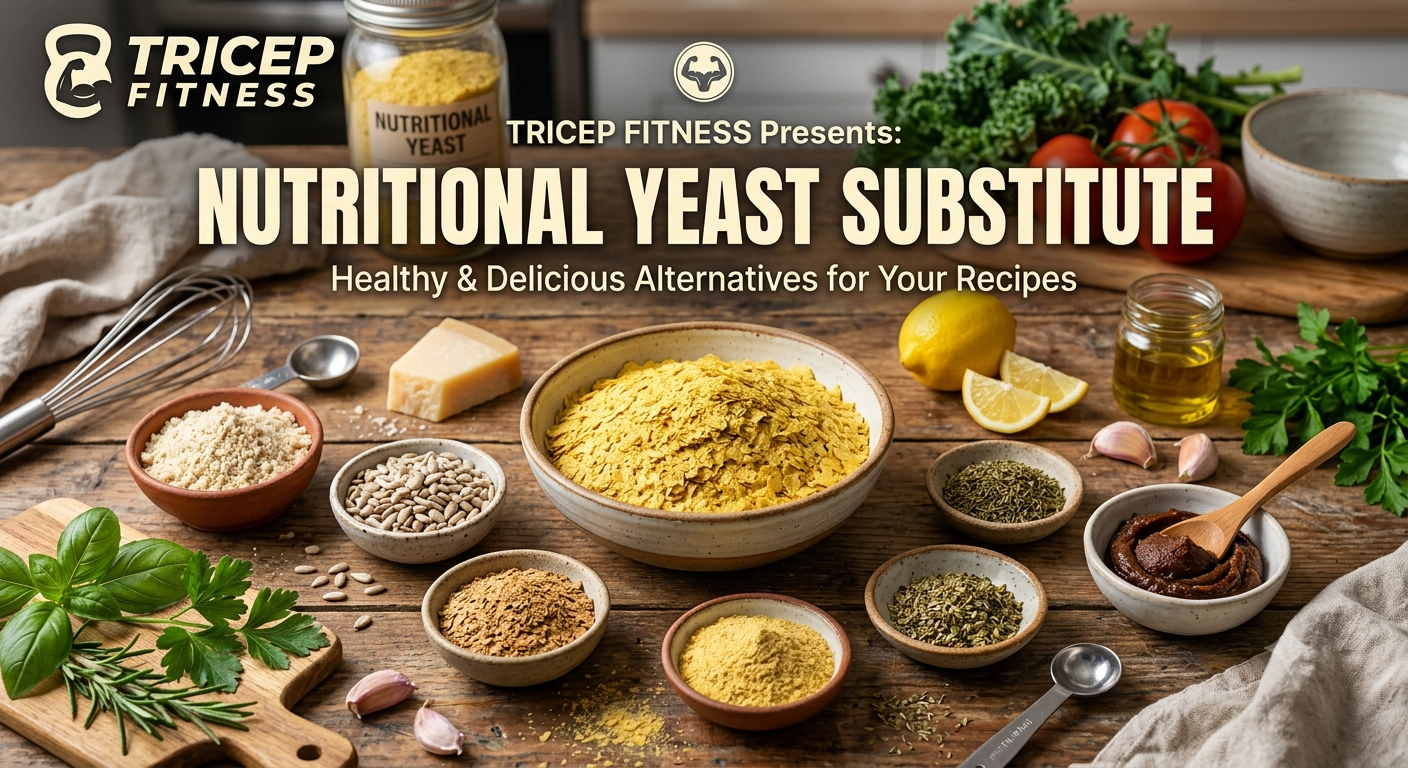
The Best Nutritional Yeast Substitutes: Culinary Alternatives for Flavor, Texture, and Nutrition
Nutritional yeast—affectionately known in plant-based circles as “nooch”—is a pantry staple famous for its distinct salty, nutty, and cheesy profile. Deactivated Saccharomyces cerevisiae yeast flakes bring a punch of natural umami (glutamates) and a hit of B vitamins to everything from vegan mac and cheese to roasted vegetables and soups.However, you might suddenly run out mid-recipe, or perhaps you’re cooking for someone with a yeast intolerance, a candida sensitivity, or a strict low-sodium diet. Finding the right nutritional yeast substitute requires matching the precise job nooch is performing in your dish: cheesy flavor, savory umami depth, thickening power, or nutritional density.
This guide breaks down the most effective alternatives based on your culinary goals.
Quick Reference: Best Substitutes by Recipe Function
| Purpose / Role in Dish | Best Direct Substitute | Key Flavor Note | Swap Ratio |
| Cheesy Topping | Grated Parmesan Cheese | Salty, sharp, nutty | 1:1 |
| Vegan Parmesan Top | Ground Cashews + Garlic Powder | Mild, rich, nutty | 1:1 |
| Savory Umami (Soups/Sauces) | White or Yellow Miso Paste | Deep, salty, fermented | 1 tsp paste : 1 tbsp nooch |
| Popcorn / Dry Seasoning | Brewer’s Yeast or Marmite Powder | Bitter-savory, yeasty | 1:1 (Brewer’s) or 1:2 |
| Rich Thickener | Chickpea Flour (Besan) | Earthy, subtle nuttiness | 1:1 (Must be cooked) |
| Yeast-Free Umami | Soy Sauce / Tamari / Liquid Aminos | Deeply salty, savory | 1 tsp liquid : 1 tbsp nooch |
1. Top Cheese-Flavored Alternatives
If your recipe relies on nutritional yeast to mimic grated cheese (like Parmesan, sharp cheddar, or Pecorino), these alternatives hit those sharp, salty, and nutty notes.
Grated Parmesan or Pecorino Romano
If dietary restrictions aren’t an issue, standard dairy Parmesan is the most straightforward replacement for nutritional yeast in terms of flavor.
-
Why it works: Both contain high levels of naturally occurring glutamates, giving them that signature sharp, salty, savory punch.
-
Best used in: Pasta dishes, pestos, risottos, and sprinkled over roasted vegetables.
-
Substitution ratio: Use a 1:1 ratio.
Homemade Cashew “Parmesan”
For a completely plant-based, dairy-free alternative that duplicates both the texture and color of nutritional yeast flakes, raw cashews are an incredible choice.
-
How to make it: Pulse 1 cup of raw cashews in a food processor with 1/2 teaspoon of garlic powder, 1/2 teaspoon of onion powder, and 1/2 teaspoon of fine sea salt until it reaches a coarse meal.
-
Why it works: Cashews offer rich healthy fats that coat the palate, while garlic and onion powder provide the savory depth that nooch usually provides.
-
Best used in: Sprinkled over pasta, salads, baked potatoes, and garlic bread.
-
Substitution ratio: Use a 1:1 ratio.
Dairy-Free Commercial Cheese Powders or Shreds
Store-bought vegan Parmesan or sharp cheddar powders (often made with potato starch and coconut oil) can step in gracefully when you need quick meltability or cheesy color.
-
Best used in: Dairy-free mac and cheese, casseroles, and cheesy dips.
-
Substitution ratio: Start with a 1:1 swap, adjusting salt to taste.
2. Rich Umami & Savory Flavor Substitutes
Nutritional yeast isn’t just about cheese—it delivers deep umami, the fifth basic taste that builds rich, complex body in savory cooking. When your dish needs depth rather than specifically mimicking cheese, turn to these rich alternatives.
White or Yellow Miso Paste
Miso is a traditional Japanese paste made from fermented soybeans, salt, and koji fungus.
-
Why it works: Fermentation yields an extraordinary level of glutamate complexity. White (Shiro) miso is slightly sweet and mild, making it closest in personality to nutritional yeast.
-
Best used in: Liquid preparations—broths, creamy pasta sauces, dressings, gravies, and soups.
-
Substitution ratio: Use 1 teaspoon of miso paste for every 1 tablespoon of nutritional yeast. Because miso adds moisture and salt, reduce the added salt in your recipe slightly.
Soy Sauce, Tamari, or Coconut Aminos
Liquid aminos and soy sauces are instant shortcuts to savory flavor profiles.
-
Why it works: Liquid aminos provide concentrated savory notes that fill the void when yeast is omitted.
-
Best used in: Stir-fries, marinades, stews, and vegetable glazes.
-
Substitution ratio: Use 1 teaspoon of liquid soy sauce for every 1 tablespoon of nutritional yeast. Avoid using this in dry coatings or popcorn seasonings where liquid will cause sogginess.
Dried Mushroom Powder (Porcini or Shiitake)
Dehydrated and ground mushrooms are one of nature’s most concentrated sources of natural umami.
-
Why it works: Porcini and shiitake powders deliver an earthy, deeply satisfying savory note without adding sodium or moisture.
-
Best used in: Spice rubs, cream sauces, risottos, gravies, and vegetable soups.
-
Substitution ratio: Use 1/2 teaspoon to 1 teaspoon of mushroom powder for every 1 tablespoon of nutritional yeast.
3. Yeasty & Fermented Alternatives
If you are looking specifically for that characteristic fermented, bakery-like, or malty flavor—and do not have a yeast allergy—these close relatives deliver.
Brewer’s Yeast
Brewer’s yeast is a byproduct of the beer-brewing process. While related to nutritional yeast, it carries a very different flavor intensity.
-
Flavor profile: Distinctly bitter, malty, and sharp.
-
Caution: Unlike mild nutritional yeast, brewer’s yeast can quickly overpower a dish if used heavy-handedly.
-
Best used in: Hearty stews, chili, and lactation snacks/smoothies (where sweetened).
-
Substitution ratio: Start with 1/2 the amount of brewer’s yeast compared to nutritional yeast, then taste before adding more.
Marmite or Vegemite (Yeast Extracts)
These dark, viscous spreads are concentrated yeast extracts popular in the UK and Australia.
-
Flavor profile: Extremely salty, intensely savory, and slightly bitter.
-
Best used in: Dissolved into warm liquids, broths, gravies, and beefless stew bases.
-
Substitution ratio: Use 1/2 teaspoon of Marmite for every 1 tablespoon of nutritional yeast, and dissolve it in hot water or cooking liquid first.
4. Yeast-Free & Hypoallergenic Alternatives
For individuals dealing with candida overgrowth, yeast allergies, or mold sensitivities, active or inactive yeast products must be completely eliminated.
Health Note: If you are substituting nutritional yeast due to a severe yeast allergy, avoid Brewer’s yeast, Marmite, and fermented products like miso or soy sauce unless cleared by a specialist. Stick to seed meals, spices, and nut powders instead.
Roasted Ground Sunflower or Pumpkin Seeds
Ground raw or toasted seeds make an exceptional nut-free, yeast-free base for seasonings.
-
How to prepare: Grind hulled sunflower seeds or pepitas in a spice grinder with a pinch of salt, onion powder, and a touch of sea salt.
-
Why it works: Rich in healthy fats and proteins, offering the body and texture of yeast flakes without any allergen risks.
-
Best used in: Pesto, roasted veggie toppings, and salad dressings.
-
Substitution ratio: Use a 1:1 ratio.
Toasted Chickpea Flour (Besan)
Chickpea flour is widely used in Indian cooking and plant-based recipes for its rich structure and nutty character.
-
How to use: Dry-roast chickpea flour in a skillet over low heat for 3–5 minutes until light golden and fragrant. Combine with a touch of onion powder and salt.
-
Why it works: Adds a bright yellow color and acts as a thickening agent in warm sauces just like nooch.
-
Best used in: Vegan cheese sauces, soups, and batters.
-
Substitution ratio: Use a 1:1 ratio (always make sure to cook the flour in liquid or oil to eliminate raw bean flavor).
How to Match the Substitute to Your Recipe
To choose the optimal substitute, identify the main function nutritional yeast serves in your recipe:
-
For Popcorn Seasoning: Use ground toasted hemp seeds + onion powder + salt, OR finely grated Parmesan cheese.
-
For Creamy Vegan Mac & Cheese: Combine white miso paste (for umami) + soaked blended cashews (for creaminess) + a pinch of turmeric (for golden color).
-
For Vegan Pesto: Use raw pine nuts, ground walnuts, or sunflower seeds mixed with garlic powder and extra sea salt.
-
For Thickening Soups & Gravies: Use toasted chickpea flour or a simple cornstarch/tapioca starch slurry alongside a splash of tamari.
Frequently Asked Questions
What is the closest 1-to-1 substitute for nutritional yeast?
For non-vegans, finely grated Parmesan cheese is the closest direct 1-to-1 swap for flavor. For plant-based cooking, a mixture of ground cashews or almond flour with garlic powder, onion powder, and sea salt provides the closest match in texture, color, and taste.
Can I use active dry yeast or baker’s yeast as a replacement?
No, absolutely not. Active dry yeast and baker’s yeast are active organism cultures used for rising bread. Consuming raw active yeast can cause digestive upset, and cooking it inside sauces will result in an unpleasant, overly bitter, doughy taste. Nutritional yeast is completely deactivated.
Is nutritional yeast the same as brewer’s yeast?
No. While both come from yeast cultures, brewer’s yeast is a byproduct of beer brewing and carries a noticeably bitter, malty flavor. Nutritional yeast is grown specifically as a food product on molasses, giving it a much milder, nuttier, and cheesy flavor profile.
How do I get a cheesy color without nutritional yeast?
To match the bright yellow/golden hue that nutritional yeast adds to cheese sauces, add 1/8 teaspoon of ground turmeric or a dash of yellow mustard powder. A little goes a long way without altering the flavor profile significantly.
How can I replace the Vitamin B12 found in fortified nutritional yeast?
Fortified nutritional yeast is a primary source of Vitamin B12 for vegans. If you omit it, replace that nutritional gap with fortified plant milks, fortified breakfast cereals, or a dedicated B12 dietary supplement.