McDonald’s Nutrition Exposed: Eat Smart, Stay Fit
Eating fast food no longer means completely abandoning your nutritional goals. Whether you are tracking daily calories, following a flexible macro-counting diet, aiming for a structured calorie deficit, or looking for low-sodium fast-food alternatives, accessing accurate nutrition data mcdonalds is essential.
As one of the largest fast-food chains globally, McDonald’s serves millions of customers daily. Fortunately, the brand provides comprehensive nutritional transparency across its menu. By understanding the calorie density, macronutrient ratios (protein, carbohydrates, and fats), and sodium content of popular items, you can make informed decisions that align with your health and fitness objectives without missing out on convenience.
Understanding McDonald’s Nutritional Breakdown
Fast food is historically known for high caloric density, elevated sodium levels, and hidden added sugars. However, examining the raw nutrition data reveals a far more nuanced picture. McDonald’s menu items vary significantly depending on cooking methods, dressings, sauces, and portion sizes.
                 MCDONALD'S MACRO BREAKDOWN (TYPICAL CATEGORIES)
┌───────────────────────┬───────────────────────┬───────────────────────┐
│     Breakfast Items   │    Burgers & Beef     │    Chicken & Fish     │
│  High Sodium & Fats   │ Moderate-High Protein │ Variable Fat Content  │
│  (Biscuits & Sausage) │  (McDouble / Big Mac) │ (Grilled vs. Crispy)  │
└───────────────────────┴───────────────────────┴───────────────────────┘
When evaluating McDonald’s menu items, three core nutritional components require direct attention:
-
Macronutrients: Protein plays a key role in muscle preservation and satiety, while dietary fat and refined carbohydrates drive the total caloric count up rapidly.
-
Micronutrients & Sodium: A single fast-food meal can easily supply over 50% to 70% of your recommended daily sodium limit (2,300 mg).
-
Caloric Density: Liquid calories (sodas, shakes, flavored McCafé drinks) often add hundreds of calories without contributing to physical satiety.
Breakfast Menu Nutrition: Calories and Macros
Breakfast options at McDonald’s range from high-protein fuel sources to calorie-dense items loaded with saturated fats and sodium.
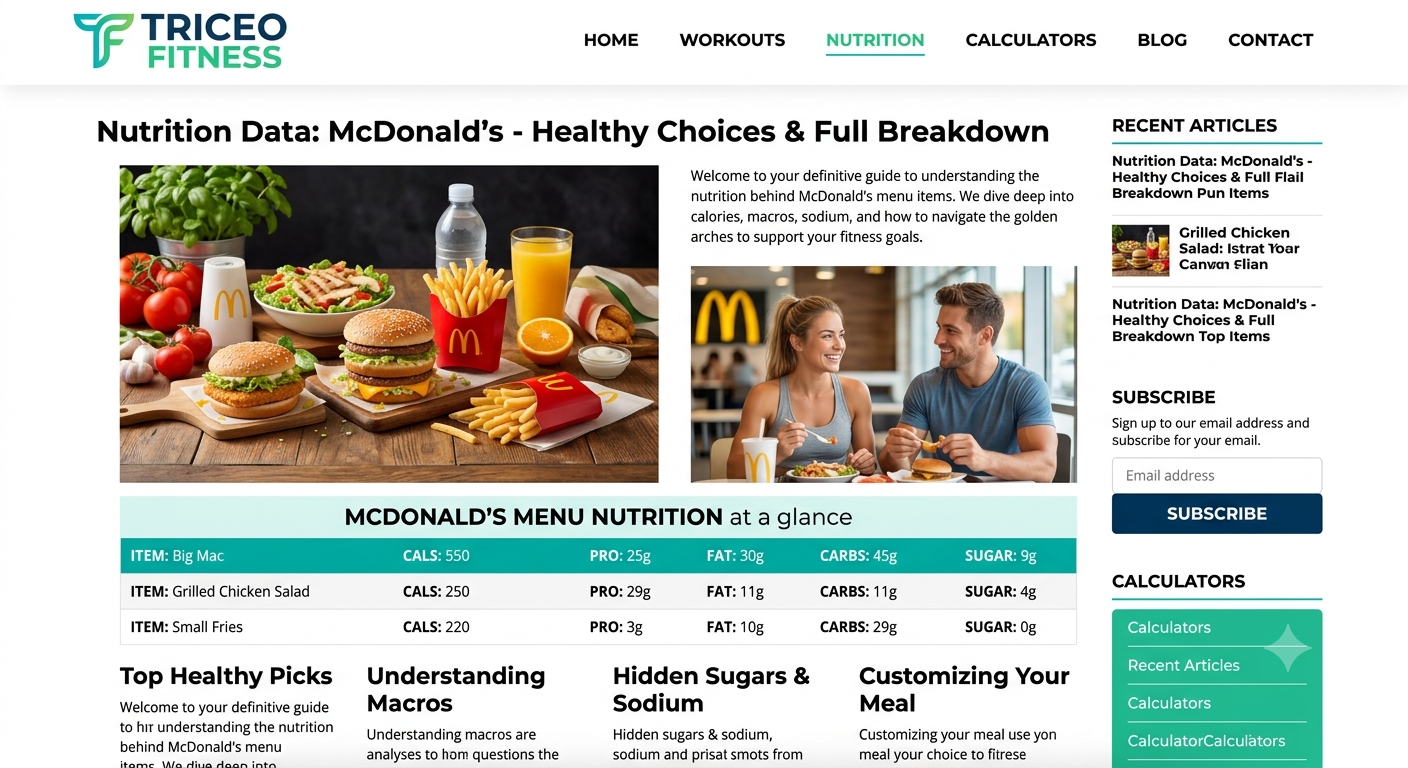
| Breakfast Menu Item | Serving Size | Calories | Protein (g) | Total Fat (g) | Carbs (g) | Sodium (mg) |
| Egg McMuffin® | 136 g | 310 | 17 | 13 | 30 | 770 |
| Sausage McMuffin® | 111 g | 400 | 14 | 26 | 29 | 760 |
| Sausage McMuffin® with Egg | 161 g | 480 | 20 | 31 | 30 | 830 |
| Bacon, Egg & Cheese Biscuit | 150 g | 460 | 19 | 26 | 38 | 1,300 |
| Fruit & Maple Oatmeal | 251 g | 320 | 6 | 4.5 | 64 | 150 |
| Hash Browns | 56 g | 140 | 2 | 8 | 18 | 310 |
Key Takeaways for Breakfast
-
The Best Choice: The classic Egg McMuffin® remains one of the most nutritionally balanced breakfast items on the menu. Packing 17 grams of protein for just 310 calories, it utilizes real whole eggs and Canadian bacon, offering a lean protein-to-calorie ratio.
-
Items to Watch: Biscuit-based items (like the Bacon, Egg & Cheese Biscuit) carry significantly more saturated fat and sodium than McMuffins due to the buttery biscuit preparation.
Burgers, Beef, and Main Entrees
The centerpiece of McDonald’s menu consists of classic beef patties, ranging from basic hamburgers to multi-patty specialty options.
| Item Name | Serving Size | Calories | Protein (g) | Total Fat (g) | Carbs (g) | Sodium (mg) |
| Hamburger | 100 g | 250 | 12 | 9 | 31 | 510 |
| Cheeseburger | 114 g | 300 | 15 | 12 | 33 | 720 |
| McDouble® | 151 g | 400 | 22 | 20 | 33 | 920 |
| Double Cheeseburger | 165 g | 450 | 25 | 24 | 34 | 1,120 |
| Big Mac® | 214 g | 590 | 25 | 34 | 46 | 1,050 |
| Quarter Pounder® with Cheese | 198 g | 520 | 30 | 28 | 42 | 1,140 |
| Double Quarter Pounder® | 279 g | 740 | 48 | 42 | 43 | 1,360 |
                       CALORIE VS. PROTEIN COMPARISON
┌────────────────────────────────────────────────────────────────────────┐
│ Hamburger (250 Cal / 12g Protein)                                      │
│ ██████████                                                             │
├────────────────────────────────────────────────────────────────────────┤
│ McDouble® (400 Cal / 22g Protein)                                      │
│ ████████████████                                                       │
├────────────────────────────────────────────────────────────────────────┤
│ Big Mac® (590 Cal / 25g Protein)                                       │
│ ███████████████████████                                                │
└────────────────────────────────────────────────────────────────────────┘
Analyzing the Beef Options
When evaluating beef options using McDonald’s nutrition data, comparing the McDouble® to the Big Mac® highlights how sauces and extra bread impact your macros:
-
A McDouble® provides 22g of protein for 400 calories.
-
A Big Mac® provides 25g of protein (only 3g more) for 590 calories (190 extra calories).
The extra bun slice and Thousand Island-style Big Mac sauce account for most of that caloric jump without adding meaningful protein.
Chicken, Fish, and Sides
Chicken and fish options are often assumed to be healthier, but breading and frying substantially alter their nutrient profiles.
| Item Name | Serving Size | Calories | Protein (g) | Total Fat (g) | Carbs (g) | Sodium (mg) |
| McChicken® | 143 g | 400 | 14 | 21 | 39 | 560 |
| McCrispy® | 181 g | 470 | 26 | 20 | 46 | 1,140 |
| Filet-O-Fish® | 142 g | 390 | 16 | 19 | 39 | 580 |
| Chicken McNuggets® (6 pc) | 95 g | 250 | 14 | 15 | 15 | 500 |
| Chicken McNuggets® (10 pc) | 158 g | 410 | 23 | 24 | 25 | 830 |
| Small French Fries | 75 g | 230 | 3 | 11 | 31 | 190 |
| Medium French Fries | 117 g | 320 | 5 | 15 | 43 | 260 |
| Large French Fries | 150 g | 480 | 7 | 23 | 65 | 400 |
Dip and Sauce Caloric Density
Never ignore the nutrition profile of condiments. Adding multiple dipping sauces can quietly tack on an extra 100–300 calories to your meal:
-
Tangy Barbeque Sauce: 45 Calories | 11g Carbs | 10g Sugar
-
Honey Mustard Sauce: 60 Calories | 4g Fat | 6g Carbs
-
Creamy Ranch Sauce: 110 Calories | 12g Fat | 1g Carbs
McCafé, Beverages, and Desserts
Liquid calories represent one of the easiest ways to exceed your daily caloric budget without realizing it.
| Item Name (Medium Size) | Calories | Protein (g) | Total Fat (g) | Carbs (g) | Sugar (g) |
| Coca-Cola® (Medium) | 210 | 0 | 0 | 56 | 56 |
| Iced Caramel Macchiato | 260 | 7 | 6 | 44 | 40 |
| Mocha Frappé | 490 | 8 | 20 | 68 | 62 |
| Vanilla Shake | 570 | 12 | 14 | 98 | 69 |
| McFlurry® with OREO® | 510 | 12 | 17 | 80 | 60 |
| Baked Apple Pie | 230 | 2 | 11 | 33 | 13 |
Nutritional Warning: A Medium Mocha Frappé or OREO® McFlurry contains over 60 grams of added sugar—exceeding the American Heart Association’s recommended daily limit for sugar intake in a single serving.
How to Customize Your McDonald’s Meal for Health & Fitness
You do not need to avoid McDonald’s entirely to stay on track with your fitness routine. By utilizing strategic menu modifications, you can drastically improve the macronutrient profile of almost any order.
                      SMART MENU MODIFICATION STRATEGY
┌────────────────────────────────────────────────────────────────────────┐
│ 1. SKIP THE MAYO / SPECIAL SAUCE  ──>  Saves 90-100 Calories & 10g Fat │
│ 2. DITCH THE TOP BUN (OPEN-FACED) ──>  Saves 70-100 Carbohydrate Cals  │
│ 3. SWAP SODA FOR DIET / WATER     ──>  Saves 200+ Liquid Calories      │
│ 4. CHOOSE MCKNUGGETS OVER CRISPY  ──>  Higher Protein-to-Fat Ratio     │
└────────────────────────────────────────────────────────────────────────┘
1. High-Protein, Low-Calorie Swaps (For Weight Loss)
-
Order a McDouble® without cheese and mayo: Asking for extra lettuce, tomato, and pickle turns this into an open-faced or lower-fat burger option packed with 20g+ of protein for under 350 calories.
-
Opt for 10-Piece Chicken McNuggets®: At 410 calories and 23 grams of protein, nuggets provide a solid protein yield without the heavy carbohydrate load of larger specialty buns.
2. Low-Carb & Keto Modifications
While fast-food buns are refined carbohydrates, you can order burgers “no bun” served in a bowl:
-
Double Quarter Pounder® (No Bun, No Ketchup): Yields roughly 40+ grams of protein and under 4 grams of net carbohydrates, making it a viable keto-friendly option.
3. Sodium Reduction Tips
Fast food relies heavily on salt for flavor preservation. To keep sodium levels manageable:
-
Request your French Fries without added salt.
-
Skip processed cheese slices, which can add up to 200mg of sodium per slice.
-
Avoid processed breakfast sausage links and bacon strips when possible.
Frequently Asked Questions (FAQs)
1. What is the lowest calorie item on the McDonald’s menu?
The lowest calorie items on the core menu are the Hamburger (250 calories), 4-piece Chicken McNuggets (170 calories), Hash Browns (140 calories), and side items like the Apple Slices (15 calories).
2. What is the healthiest high-protein meal at McDonald’s?
The Egg McMuffin® (310 calories, 17g protein) for breakfast and the McDouble® (400 calories, 22g protein) or a 10-piece Chicken McNuggets® (410 calories, 23g protein) for lunch/dinner offer the most balanced protein-to-calorie ratios on the menu.
3. Does McDonald’s offer complete nutrition data on its app?
Yes. McDonald’s provides a dynamic nutrition calculator on both its official website and mobile app. This tool updates calorie counts, macros, and allergen warnings automatically as you add or remove ingredients (such as mayo, cheese, or sauces).
4. How many calories are in a medium McDonald’s meal?
A standard medium meal—consisting of a Big Mac®, Medium French Fries, and a Medium Coca-Cola®—totals approximately 1,120 calories, 49 grams of fat, 145 grams of carbohydrates, and over 1,500 mg of sodium.
5. Is McDonald’s oatmeal actually healthy?
While the Fruit & Maple Oatmeal provides whole-grain oats and dietary fiber, it also contains 31 grams of sugar (largely from added brown sugar and sweetened fruit packages). Requesting it without the brown sugar crumble significantly improves its nutritional profile.